




So it turns out that humans aren’t supposed to spend most of the day sitting still… who knew?! Well….us.
We’re built to move, shift and change position regularly. Walking. Standing. Reaching. Putting the kettle on. Not conforming to the same cashew-shaped position at a desk for eight hours straight.
And yet, that’s what many workdays look like now. It’s easy to feel as though age is catching up with you, like your body just isn’t what it used to be. But age isn’t always to blame.
Yes. Sitting all day puts repeated strain on the body, so using the right chair reduces how much your body has to compensate. Poor support means small stresses build up across the day. Muscles stay switched on, joints take extra load, circulation drops, and fatigue creeps in.
A quality ergonomic chair should:
- Support the spine’s natural shape instead of letting it collapse
- Reduce pressure through the hips, tailbone, and legs
- Allow movement without throwing alignment out
- Hold its support over time, not just on day one
- Comfort isn’t about plush softness; it’s about reducing unnecessary strain.
Aches and exhaustion rarely come from one moment. They tend to build slowly from small stresses repeated across an eight-hour workday. We often call these micro-trauma. A slight slump that never quite resets. A hip that stays compressed. A head that drifts forward as fatigue sets in. Muscles stay switched on longer than they should. Joints carry load for hours at a time, day after day.
Posture often gets the blame, but the chair you're sitting on plays a much bigger role in how your body copes – and it could be making things worse.
Why Soft Chairs Make You More Tired (Even When They Feel Comfortable)
Soft chairs are easy to like. You sit down, the pressure disappears, and everything feels fine. At first.
The issue is that softness doesn’t equal support. Once foam compresses, it stops giving your body clear reference points. Without those, your body starts filling in the gaps.
Deep postural muscles stay switched on to keep you upright. Not in a way you consciously feel, but enough that they never fully relax. Minute after minute, they keep working in the background.
Over time, that constant effort adds up. Not to one obvious injury, but to micro-trauma that quietly builds.
Why This Matters At Work
In Australia, it’s not just about feeling uncomfortable or sore, bad chairs can be considered a workplace health and safety risk. Safe Work Australia flags sedentary work as something to watch, especially when movement and proper support are missing.
Why Gaming Chairs Feel Good… Until They Don’t
It’s also worth mentioning the rise of gaming chairs as a work-from-home option. On the surface, they look supportive. High backs. Thick padding. A chair that looks like it’s doing something.
The catch is that gaming chairs are built for aesthetics. Their fixed shapes and heavy padding can limit movement and encourage static postures, which is where fatigue quietly builds.
For all-day desk work or long gaming sessions, chairs designed around adjustability, movement, and long-term support tend to hold up far better.
The Impact On Your Spine
Your spine is designed to maintain a natural S-curve, including a gentle inward curve in the lower back known as lumbar lordosis.
When a chair stops supporting this, the change is gradual rather than dramatic. The lumbar curve flattens. The upper back rounds. Shoulders drift forward. And before you know it, you look like a cashew.
As that structure collapses, load shifts away from the spine’s stronger support systems and into smaller muscles and passive tissues. They fatigue much faster, which is why discomfort builds even when you haven’t done anything that feels particularly strenuous.

Where Most Chairs Fall Short
Most ergonomic chairs put all their effort and design into supporting the lower back and treat everything above it as an afterthought.
Without proper thoracic support, the upper back has nothing to lean into. The rib cage drifts forward, the shoulders follow, and the neck starts doing more work than it should. Breathing often becomes shallower as posture slips, which only adds to that end-of-day fatigue.
Lower-back support matters, but it can’t do the whole job on its own.
What Support Needs To Do Instead
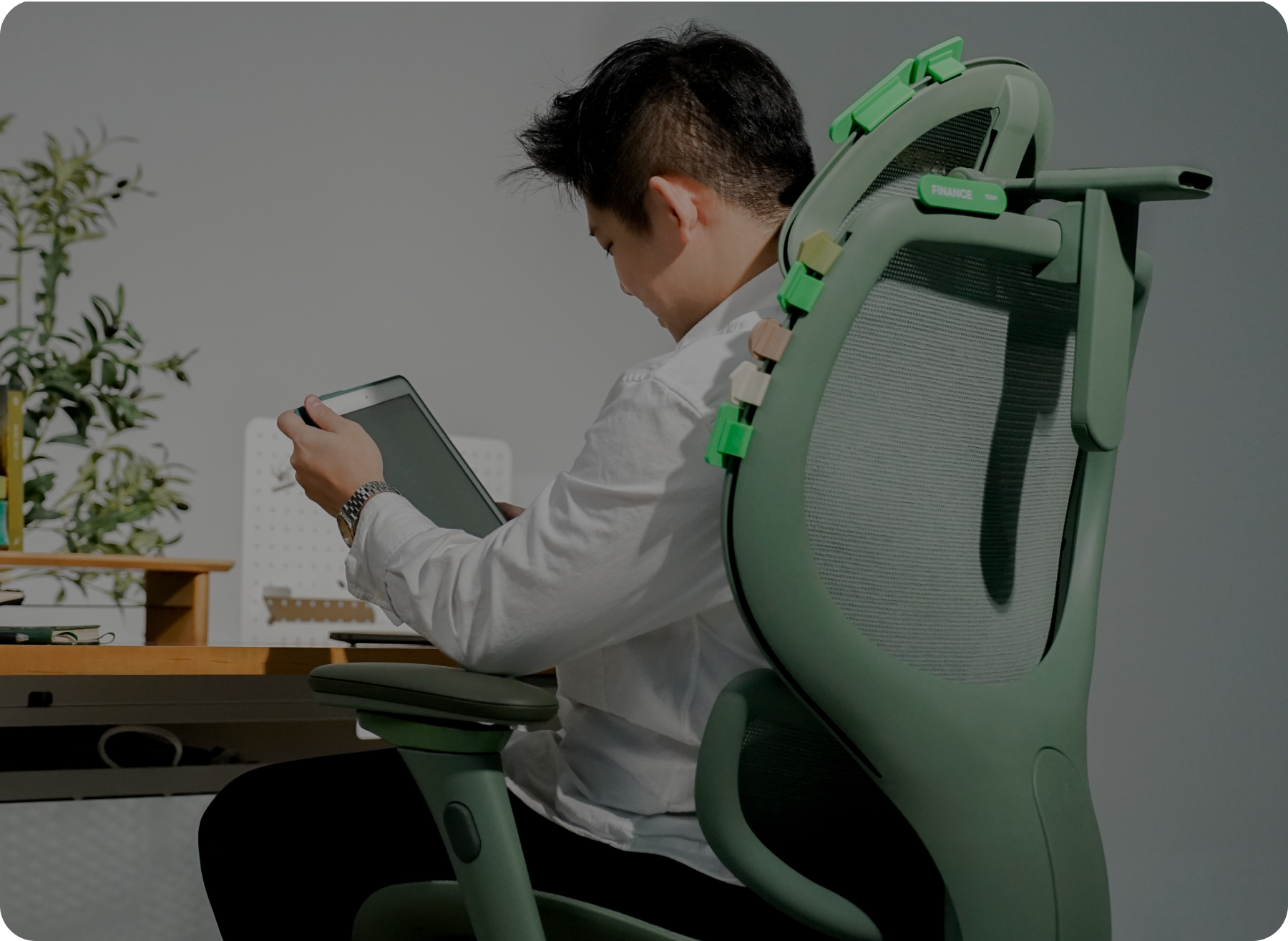
Good support doesn’t boss your body around. It works with it. Instead of locking you into one “correct” position, it stays in contact as you move. Dynamic lumbar support helps keep the spine’s natural curve in place, even when you shift or lean back. It doesn’t disappear the moment you change position.
At the same time, proper upper-back support gives you something to lean into, gently resisting that slow forward fold that creeps in as the day wears on. You’re supported, but not stuck.
Why Your Hips, Tailbone And Legs Go Numb First
This is usually where people notice something’s off. Not sharp pain. Just a sense that sitting doesn’t feel great anymore.
Many office chairs rely on flat, padded seat pans with limited adjustment. On the surface, that seems fine. Sit down, sink in, job done. But the problems show up quickly once you stay there.
Pressure settles straight onto the sit bones. If the seat depth is even slightly wrong, tissue behind the knees gets compressed. Rigid seat pans push load directly through the tailbone.
Nothing screams emergency. It just feels… uncomfortable. Like you can’t quite get settled.
What Makes Your Legs Feel Numb Or Tingly?
As pressure builds, blood flow drops. That’s when numbness and tingling start creeping into the legs.
At the same time, the pelvis rolls backward into posterior tilt. Once that happens, the lower back loses its natural alignment. The hips take more load than they should, and nerves running down the legs can become irritated over time.
When pelvic neutrality disappears, the rest of the spine has to pick up the slack. That’s when discomfort starts travelling upward instead of staying put.

What Helps Reduce This
This part isn’t complicated, but it is specific.
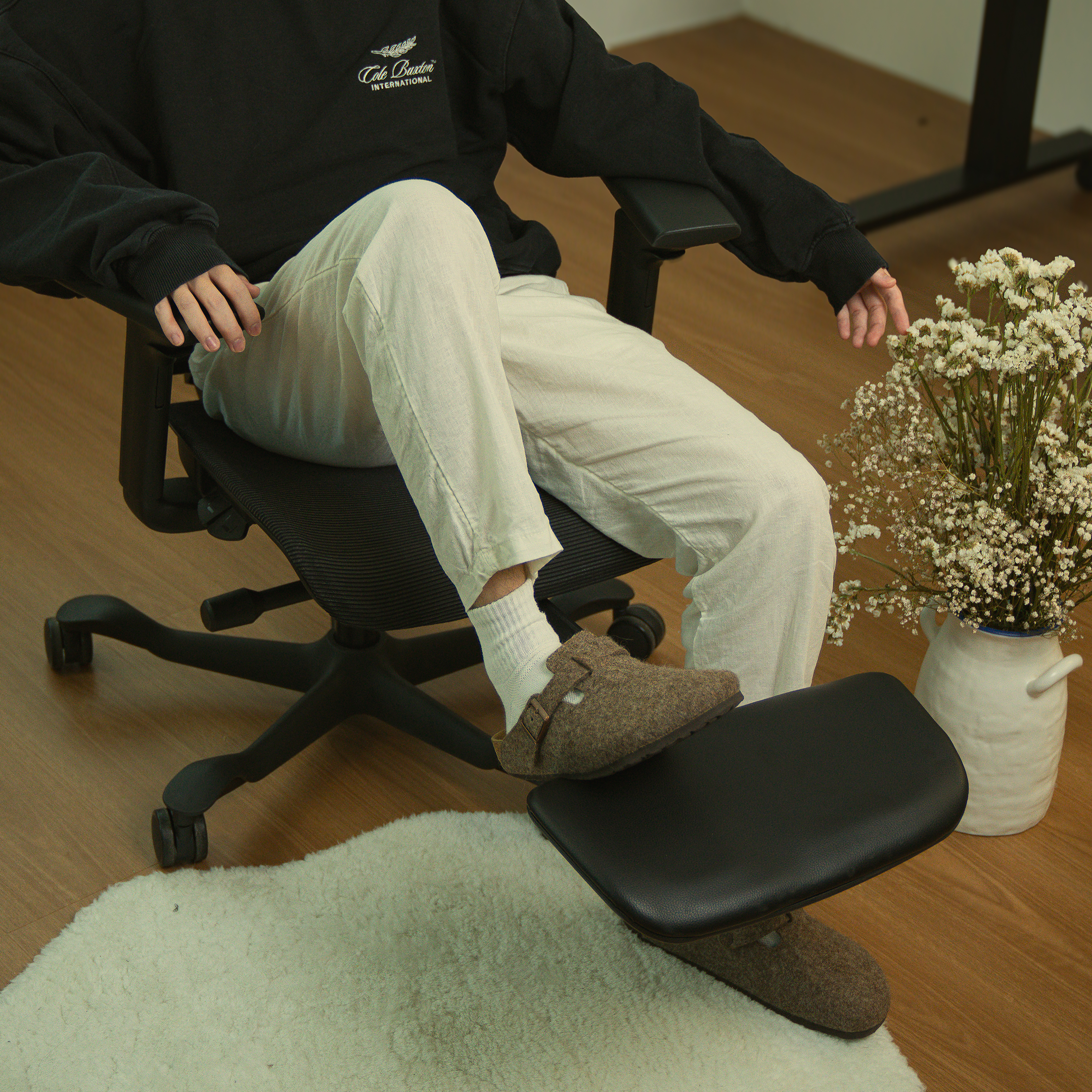
- Seat depth needs to be adjusted so circulation behind the knees isn’t restricted
- A subtle forward seat tilt helps the pelvis stay neutral instead of rolling back
- The load needs to be spread across the seat surface, not concentrated through the tailbone
When the seat supports the pelvis properly, the rest of the body doesn’t have to keep compensating.
Why “Tech Neck” Isn’t A Neck Problem
Your head weighs about five kilograms. When it’s sitting nicely over your spine, no big deal. Your body can handle that. The trouble starts when it creeps forward. Just a little at first. Then a bit more. Suddenly, your neck and upper back are doing a lot more work than they signed up for.
That’s leverage at play. As the head moves out in front of the body, the load through the neck increases fast. Even a small shift can put much more pressure on the cervical spine and surrounding muscles.
This is why neck pain often feels out of proportion to what you’ve been doing. You haven’t “done” anything dramatic. Your head has just been hanging out in the wrong spot for longer than it should.
Why Most Headrests Fail
Most headrests are designed like pillows. Soft. Cushioned. Comfortable to lean into. The problem is that leaning isn’t support.
Instead of helping with alignment, many headrests simply catch the weight of your head wherever it happens to be. If your head is already drifting forward, the headrest often just meets it there, quietly reinforcing the posture that’s causing the strain in the first place. It feels nice at the time, but it just doesn’t fix much.
How To Fix A Sore Neck
Good head support works a bit differently. Instead of something you sink into, it provides a light, consistent point of contact.
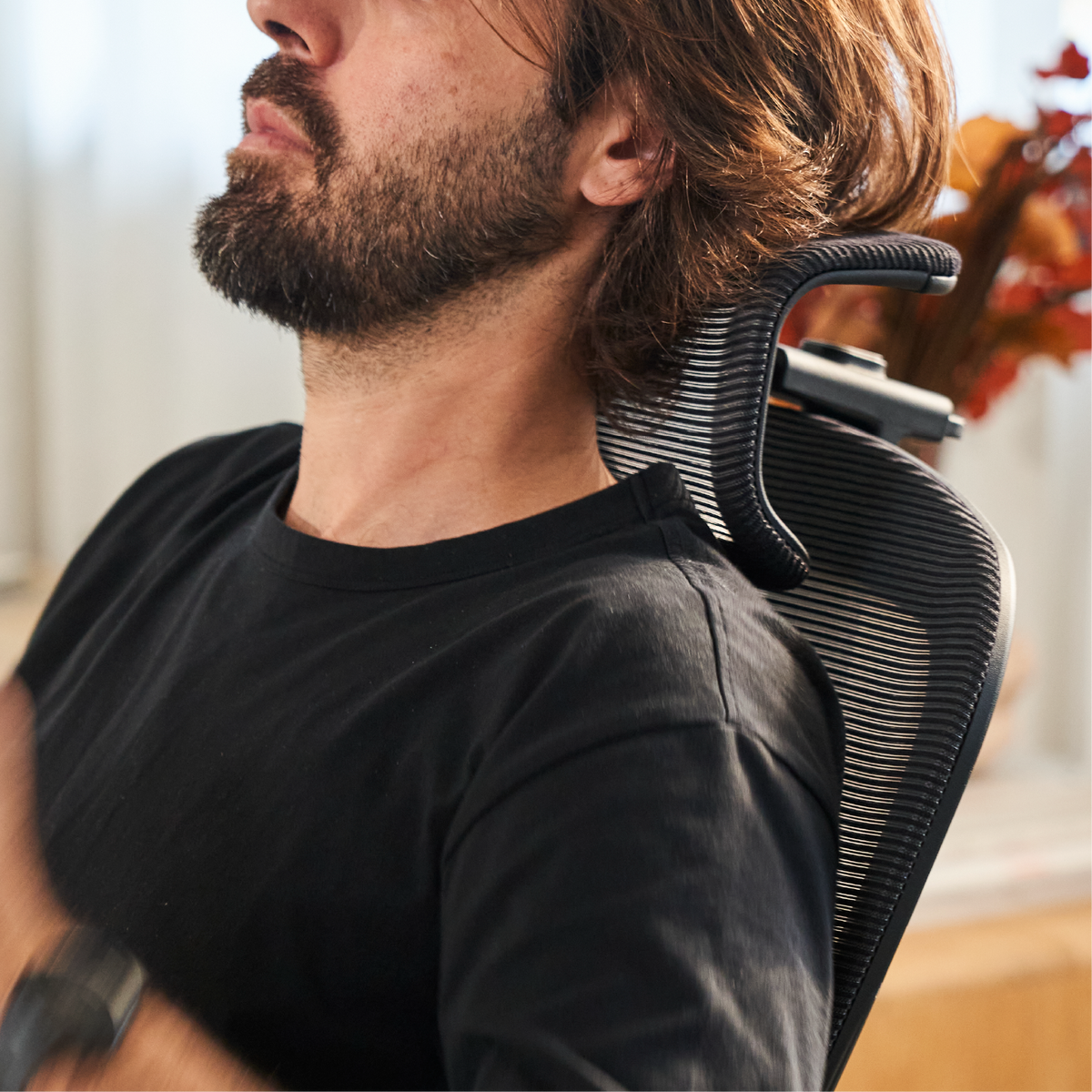
A depth-adjustable headrest can be positioned to meet the base of the skull, at the occipital ridge. When it’s set up properly, that contact gently encourages your head back toward a more neutral position, instead of letting it hang forward all day. You’re not being pushed, you’re being reminded.
The goal isn’t to lock your head in place or sit perfectly still. It’s to take some of the load off your neck so your muscles aren’t doing all the work while you’re trying to get through the day.

Why Sitting Still Makes Focus Harder
A lot of people focus better when they can move a little. Not big movements. Just small shifts. Leaning back. Resetting posture. Changing position without thinking about it.
This is especially true for people with ADHD (diagnosed and pretty sure), but it’s far more common than most realise. When chairs restrict movement, people adapt in other ways. Slouching. Perching on the edge of the seat. Twisting sideways.
Over time, poor posture becomes a coping strategy.
The Impact On Our Physical Health
This focus on movement matters beyond comfort and concentration. Research from Curtin University has also linked prolonged sedentary work to broader health risks, including higher rates of cardiovascular disease, metabolic conditions, and other long-term health issues.
This aligns with other peer-reviewed research, which shows that prolonged sitting can reduce creative thinking and problem-solving.
That doesn’t mean sitting is suddenly dangerous. It means long periods of unsupported, uninterrupted sitting place stress on the body in ways that add up over time. Reducing that load, through movement and proper support, is part of managing the risk.
Why Durability Is A Safety Issue – Not A Luxury Feature
Most chairs don’t fail dramatically. They often fade over time. Mesh starts to sag. Foam loses its shape. Mechanisms loosen. Gas lifts weaken. Support becomes inconsistent long before anything looks broken.
As that structure degrades, the load on your body shifts. Muscles start compensating again. Joints take on more stress. Injury risk rises quietly, without an obvious trigger.
Why Chair Standards Exist
This is exactly why seating standards exist. Australian and international testing looks at how chairs hold up under real-world use, not just how they feel on day one.
AFRDI and AS/NZS 4438 testing focuses on long-term durability. BIFMA certification addresses structural reliability, including gas lift safety.
Durability isn’t about status or premium finishes. It’s about knowing your chair will keep doing its job year after year.
Why One-Size-Fits-All Chairs Don’t Fit Anyone
Bodies are all shapes and sizes, that’s not anything new! But aside from obvious features, there are some that aren’t so obvious. People vary in torso length, pelvic geometry, shoulder width, and leg length. A fixed chair can actually accommodate only a narrow range of body types.
Why Adjustability Is Non-Negotiable
A chair supports your body for thousands of hours. It needs to be set up like athletic equipment, not for aesthetics.
Proper adjustment supports spinal curves, keeps the pelvis neutral, and shares load between the chair and the body. Without it, even a well-designed chair falls short.
Is Your Chair Reducing Load Or Adding To It?
Pain isn’t inevitable, but poor support adds up. A chair can feel “fine” and still be increasing fatigue, compressing joints, and asking muscles to work harder than they should. That cost builds slowly, then shows up all at once.
A single physio visit in Australia often costs around $100+. Preventing just a few visits a year quickly changes the value equation.
This isn’t about buying the fanciest chair on the market. It’s about choosing quality equipment that works with your body, not against it. Your chair is either reducing load or adding to it. The difference becomes clear over time.
If you’re ready to find a chair that’s better for your health, explore our range of ergonomic options and start feeling more comfortable.