


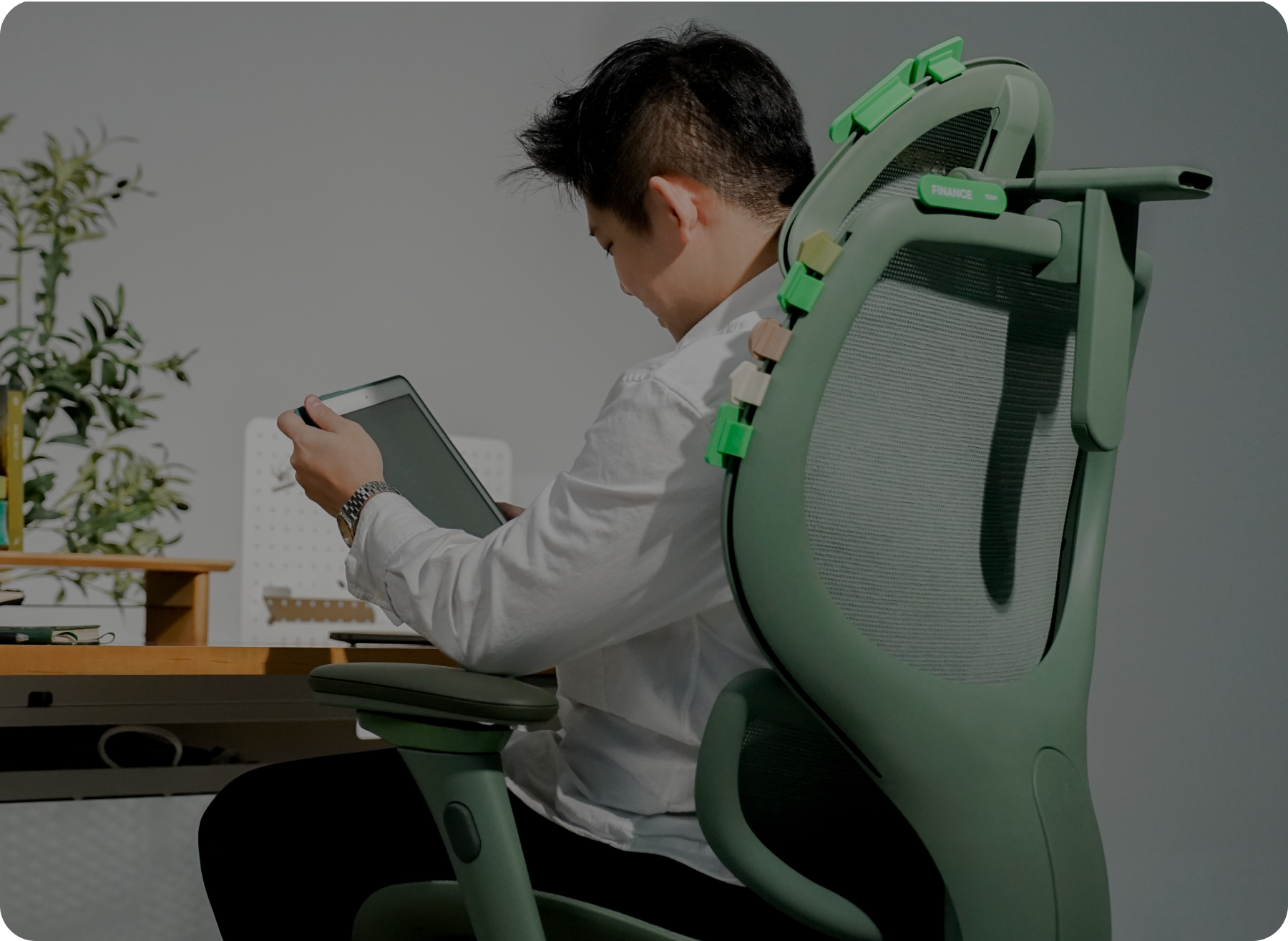


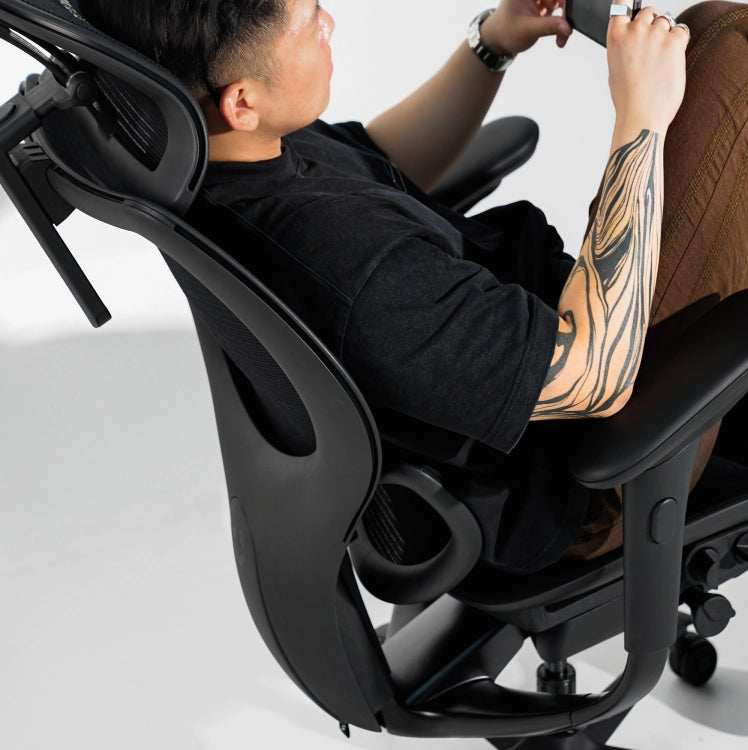
Yes – and usually not for the reason most people think. The instinct is to blame posture. Sit up straighter, shoulders back, stop slouching. But if that were the whole story, people who sit perfectly upright all day wouldn't end up sore. And they do.
What's actually happening is more mechanical than that, and once you understand it, choosing the right chair becomes a lot more straightforward.
So What’s Actually Causing Back Pain?
There are two things going on when a bad chair wears you down over the course of a day.
The first is static loading: This is what happens when your body is held in one position for too long. Muscles that are designed to move stay switched on continuously, blood flow reduces, and fatigue accumulates. You don't feel it at 10am, you feel it at 3pm when your lower back suddenly feels like it's made of concrete.
The second is lumbar flattening: Your lower spine has a natural inward curve. When a chair doesn't support that curve – or actively works against it – the spine starts carrying load in a way it wasn't designed to. That dull ache that creeps in by mid-afternoon? That's usually the result.
Most standard office chairs fail on both counts. They hold you still and leave your lumbar unsupported. Your body spends the day compensating, and by 5pm, it's done.
The 30 Second Check You Can Do Now
Before going further, let’s do a quick test. Take 30 seconds to check the following:
- Sit all the way back in your chair. Can you feel support in the small of your back, or is there a gap?
- Lean back slightly and shift your weight. Does the chair respond and move with you, or does it feel rigid and fixed?
- Look at your legs. Are your feet flat on the floor with a small gap behind your knees, or are you adjusting your position to get comfortable?
If you're moulding yourself to fit the chair rather than the chair fitting you, that's where the problem starts. And the fix isn't about sitting better – it's about getting a chair that actually does its job.
Why The Pain Builds Slowly (And Then All At Once)
Here's why this catches people off guard. When you sit in a chair that doesn't support natural movement, the damage isn't immediate. Muscles compensate. You shift. You adjust. The body is good at absorbing load in the short term.
But research on prolonged sitting consistently shows that muscle fatigue and spinal load accumulate even when posture looks fine from the outside. And separate studies on disc pressure show that seating that doesn't support natural movement may lead to higher spinal loading over time.
That slow build is exactly why people underestimate their chair as the cause. It's months before you notice that you feel worse at the end of every workday, and by then, it just feels normal.
The Signs Your Chair Is The Problem
You'll usually feel it before you've connected the dots.
Lower back: A dull ache that sets in by mid-afternoon, constant shifting in your seat, noticeable relief when you stand up or take a walk.
Upper back and neck: Tight shoulders that weren't tight in the morning, neck stiffness by the end of the day, and a gradual forward head position you keep having to correct.
Circulation and general fatigue: Pressure or numbness under your thighs, a heavy or sluggish feeling after long sitting blocks that doesn't go away quickly when you move.
If several of these sound familiar, the pattern is the chair – not your posture, not your fitness. Most chairs focus on aesthetics over mechanics, so fancy designs (including many gaming chairs) can be misleading.
What A Better Chair Actually Does Differently in 2026
The shift in ergonomic design over the last few years isn't really about features. It's about a different philosophy.
- Older thinking: build a chair with good support, and teach people to sit correctly in it.
- Current thinking: build a chair that supports movement, so people don't have to think about it at all.
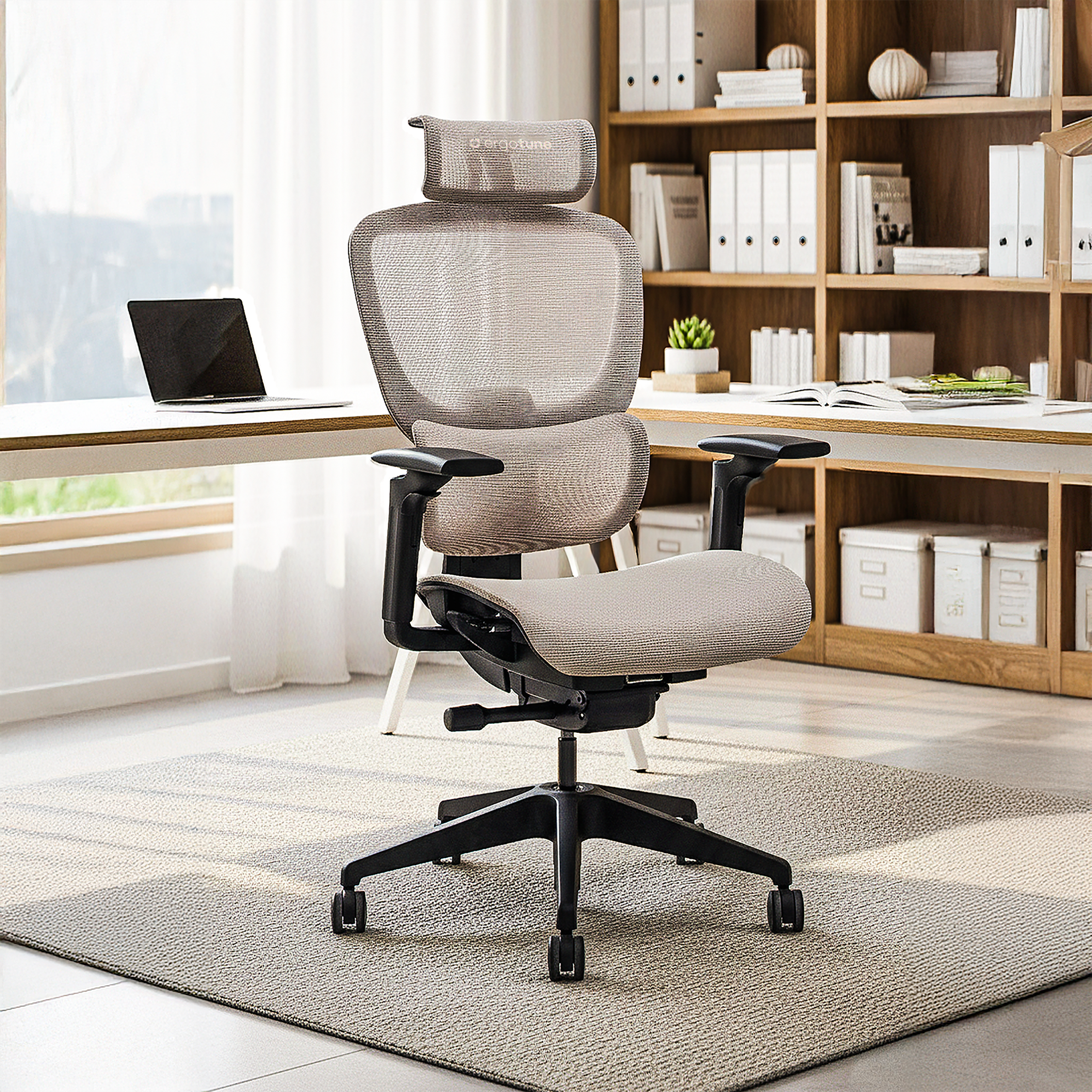
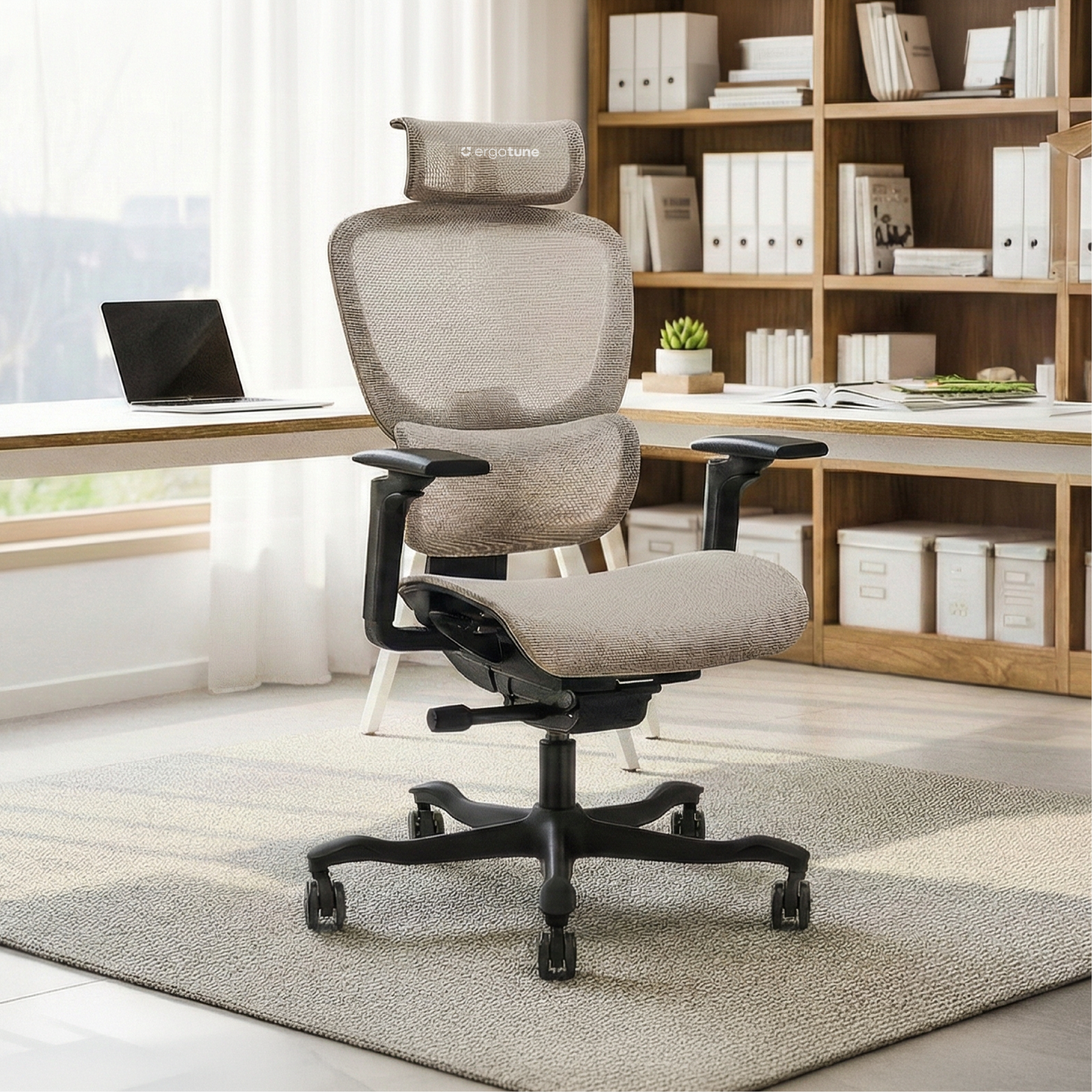
The difference in practice is the gap between a passive chair and a responsive one. A passive chair has fixed lumbar support and relies on you to stay still. A responsive chair (like the ergotune ATLAS™ system) adjusts as you shift, maintaining adaptive lumbar support in real time.

Even A Good Chair Won't Help If It's Set Up Wrong
Three things to get right:
- Seat depth: You want two to three fingers of space between the seat edge and the back of your knees.
- Lumbar position: The support should sit in the small of your back – not at your hips or ribcage.
- Let the chair move: A 2022 study found that allowing movement while seated meaningfully reduces spinal load. Don't lock your chair upright.
Quick Reference: Good Chair vs. Bad Chair
| Feature | Good Chair | Bad Chair |
|---|---|---|
| Lumbar Support | Adaptive, follows your spine | Fixed or non-existent |
| Movement | Synchro tilt, encourages motion | Locked, rigid |
| Seat Material | Breathable, tensioned support | Heat-retaining foam |
| Adjustability | Multi-point, personalised fit | One-size-fits-all |
| Long Term Comfort | Holds up over hours | Declines after 1–2 hours |
If you're sitting in the right column, your body is doing work it shouldn't have to.
Why Cheap Chairs Fail Over Time
A chair can feel fine in the first week and quietly become the source of pain by month three. That's how cheaper chairs are built. Foam softens, tension goes slack, and you end up in a compromised position. We break this down further in our article on how long desk chairs actually last.
So, What Should You Actually Do?
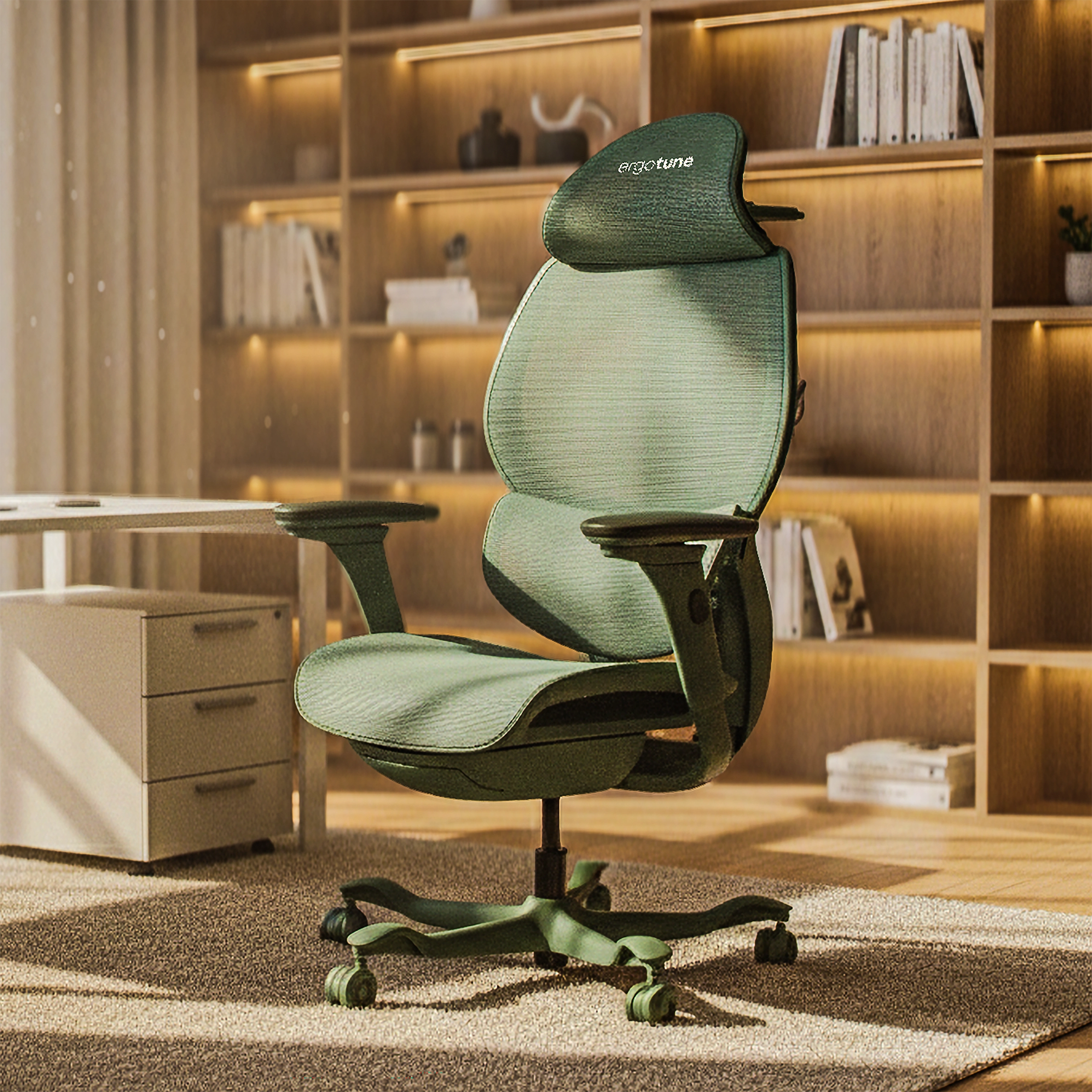
The goal is straightforward: find a chair that supports your spine without constant adjustment. If you're ready to make that change, explore the ergotune range from the Joobie Lite through to the Vesby.
- Self-adjusting lumbar support
- Synchro-tilt mechanism
- Multi-point adjustability (height, arms, back, headrest)
- Breathable mesh for airflow
- Durable frame and tension system