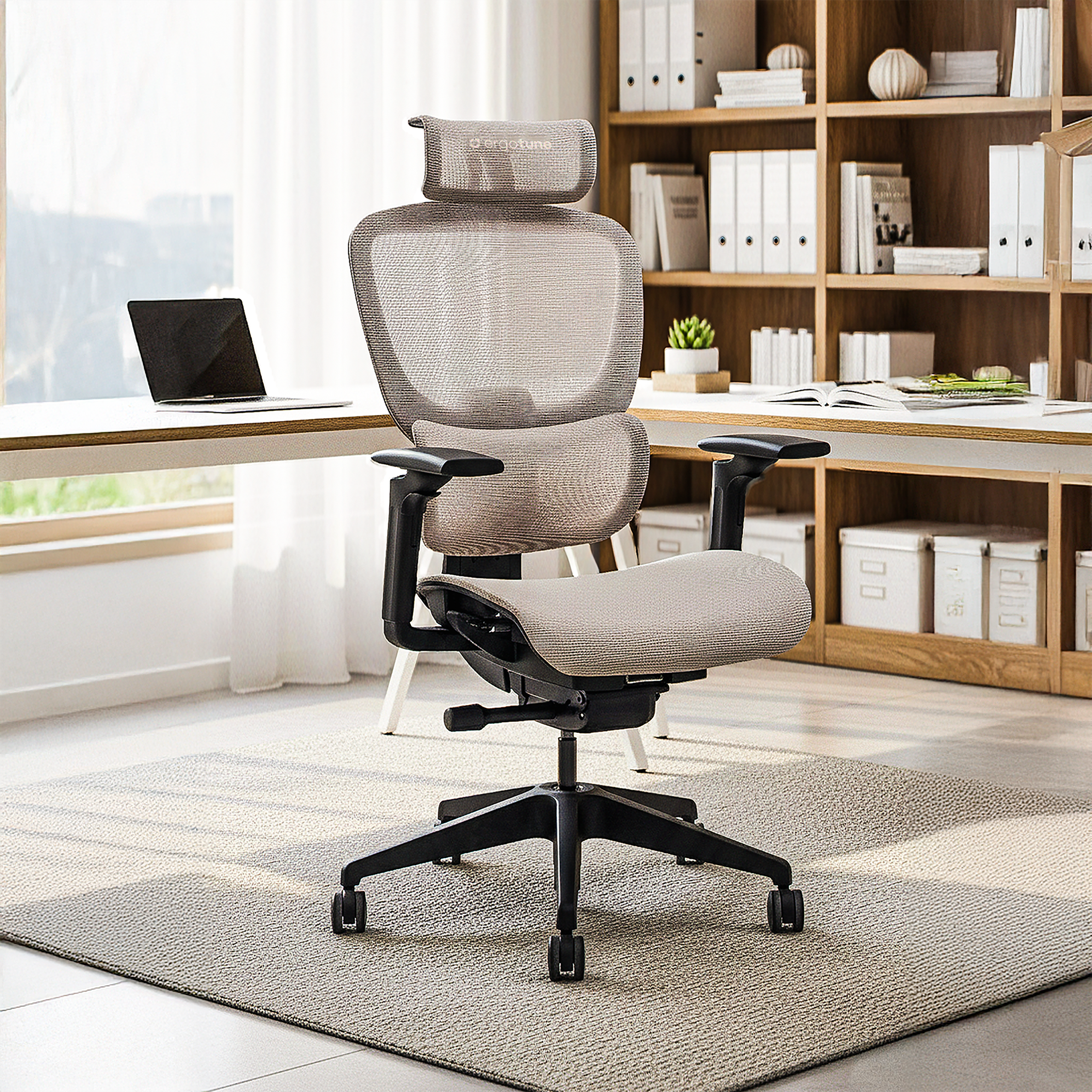

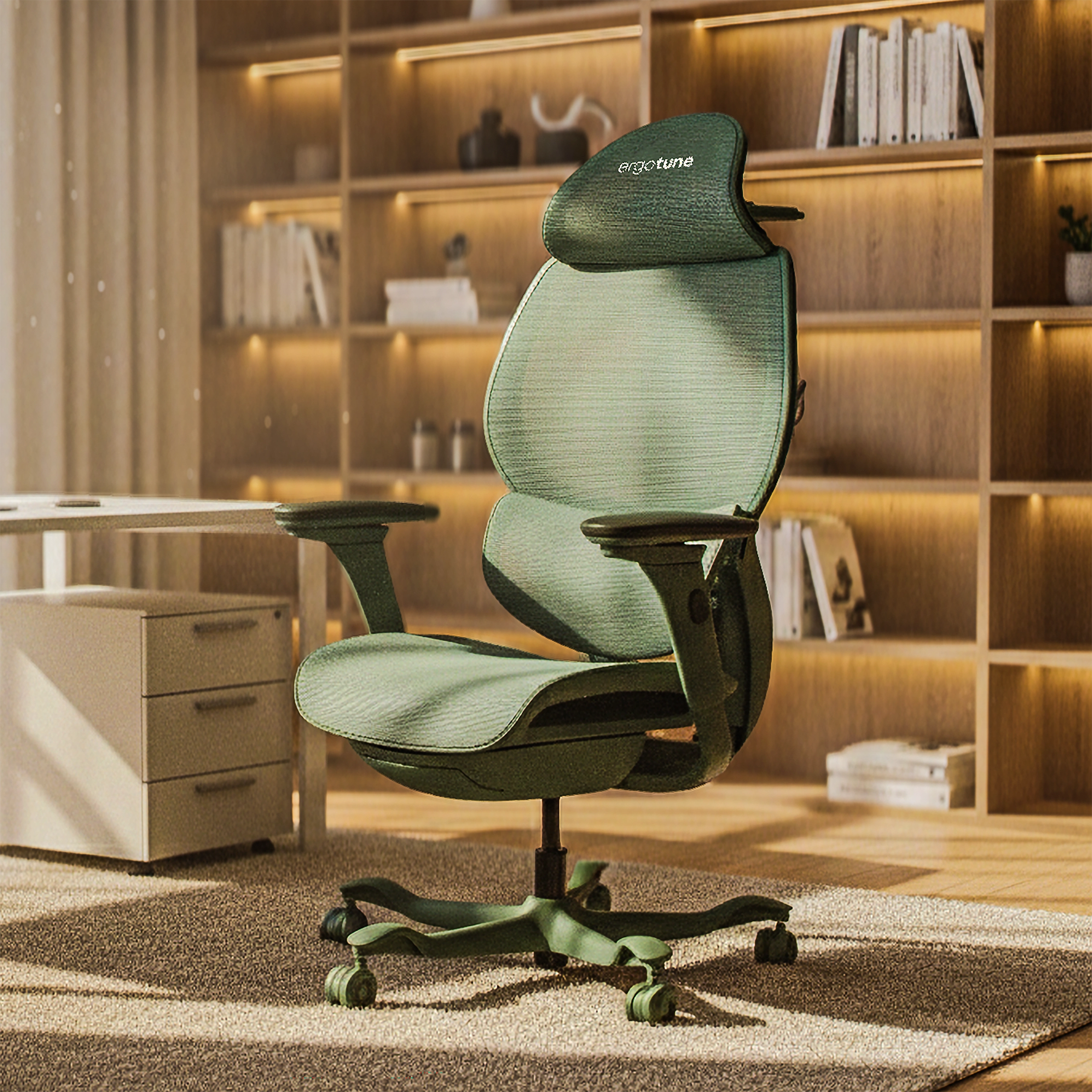
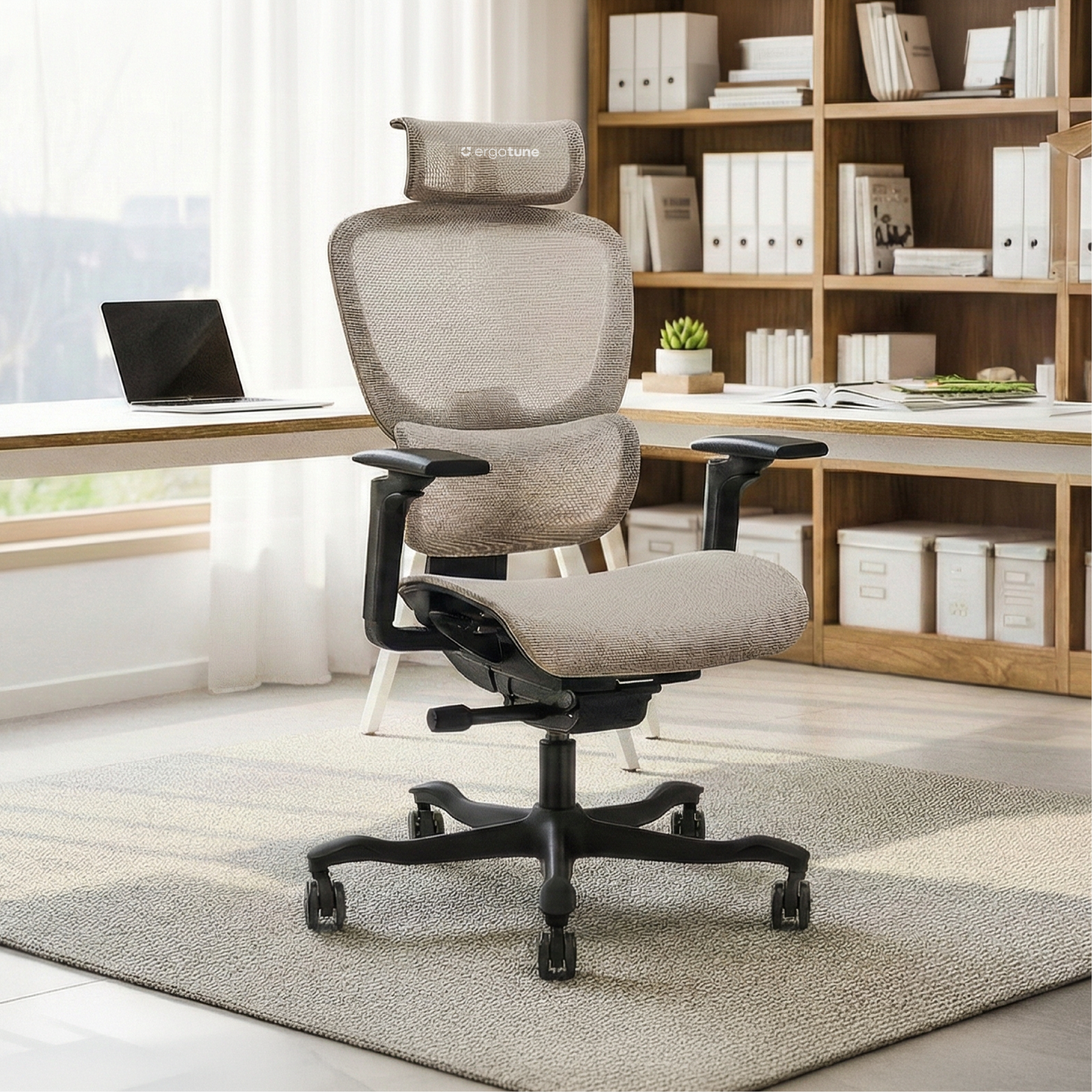

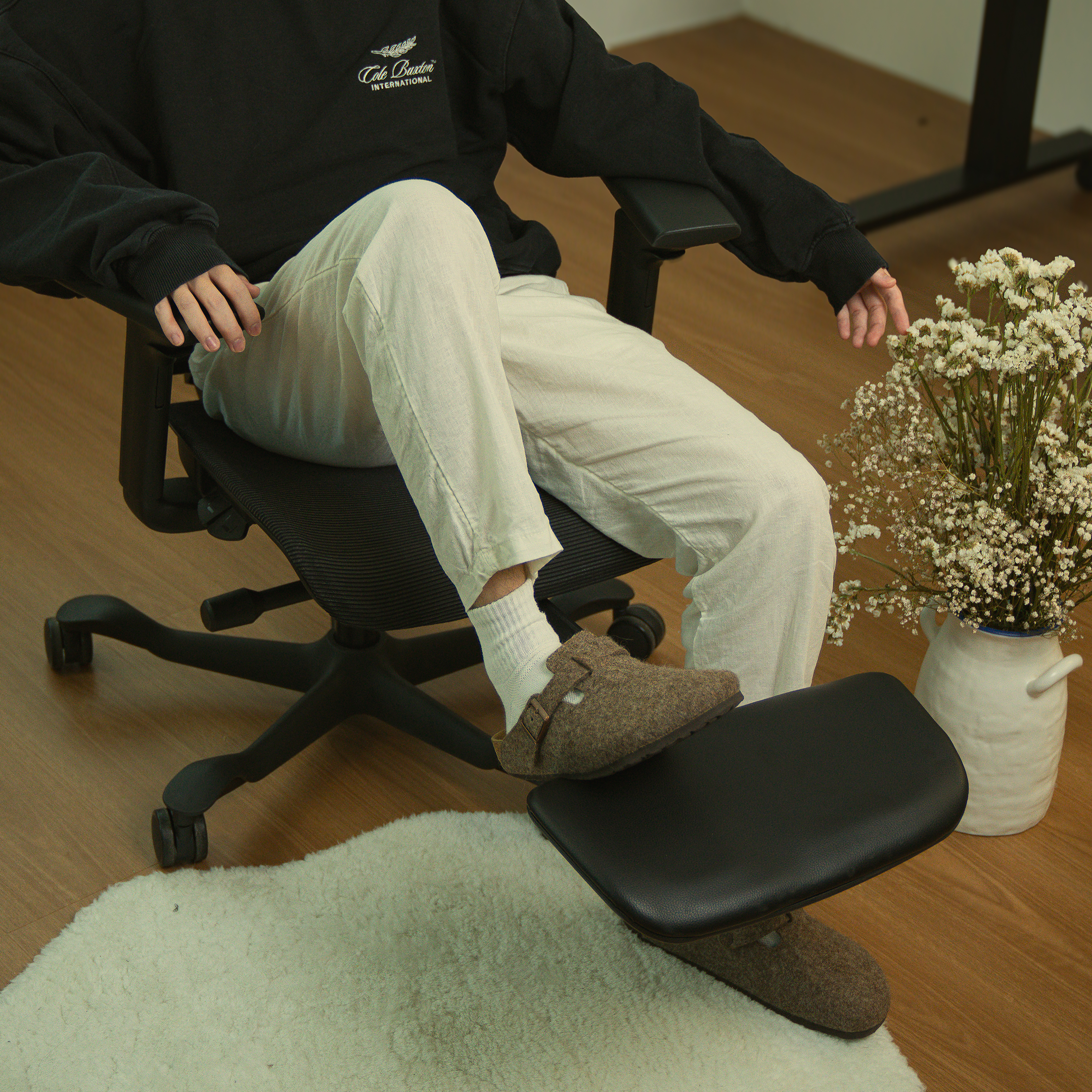



There’s a question every sceptical buyer asks before buying an ergonomic chair… “Is this just another generic chair with a fancy logo slapped on it?”
It’s a fair question, the market is crowded, noisy and increasingly repetitive. Scroll long enough, and you’ll start seeing the same silhouettes, the same mechanisms, the same ‘features’, just dressed up in different colours and names.
Most look great in photos, and plenty feel fine for a few months. Then, before you know it, the creaks start. The mesh sags. Suddenly, that fancy chair doesn’t feel so great anymore.
TL;DR: The Vesby Story
-
Three Years, Not Three Months
Vesby went through multiple failed prototypes and complete redesigns before reaching production. The final chair shares only around 10-15% DNA with the original concept.
-
Tested Until Things Broke
Vesby was validated against recognised BIFMA and ISO durability standards, including rough, repetitive load testing designed to expose fatigue and weak load paths.
-
Global Engineering, Purpose-Led Sourcing
Designed in Singapore, with key components sourced globally based on performance, not marketing optics.
-
Built To Last, Not To Trend
Material choices, internal structures, and modular components prioritise longevity and repairability over showroom aesthetics.
-
Value In The Mechanism, Not The Markup
Vesby’s cost reflects engineering, tooling, and testing, not decorative metals or retail theatrics.
When we started designing Vesby, we weren’t trying to copy and paste another chair, we were reinventing the design cycle entirely.
Vesby began with a blank CAD (Computer-Aided Design) file, not a supplier catalogue. That choice is why it took three years, why multiple prototypes were scrapped, and why the final chair stands out amongst competitors without ever needing to be loud or obnoxious.
Here’s how our Vesby chair evolved and also why we only kept around 10% of the original design.
Why ‘Mid-Range’ Usually Means ‘Generic Clone’
Most ergonomic chairs fall into one of two categories. At one end, you have the ultra-premium brands with exceptional engineering, decades of refinement and prices to rival a small second-hand car. They’re good, but often outside the budget of many consumers.
At the other end sits the ‘affordable’ and ‘fun’ categories. Chairs that come in all colours of the rainbow and interesting shapes (shells, anyone?). Sure, they look great on Instagram, but realistically they rely heavily on catalogue mechanisms, cosmetic aluminium structure and plastics chosen for appearance rather than fatigue resistance, even gaming chairs fall victim to aesethtics over support. Cheap chairs often develop noise, lose their shape or sag within 12-24 months of daily use. The mechanical structure of the chair weakens over time, resulting in costly replacements.
When designing our Vesby, the gap between genuine engineering and accessible pricing was an important priority.
“Customers kept telling us the same thing: ‘I want something that feels engineered for me, not just branded.’
To do that we couldn’t just iterate on an existing OEM (Original Equipment Manufacturer) chair. We didn’t want to adopt anyone else's compromises, so our Vesby started at zero. This way we could control geometry, tolerances, mesh behaviour, serviceability and long-term performance.

Why We Scrapped The ‘Perfect’ Features
If you compare early Vesby concepts to the final chair, the differences are substantial, and intentionally so.
The final Vesby shares only about 10-15% DNA with the first concept sketch. What stayed consistent was the philosophy: breathable mesh, personalised support and a clean silhouette suitable for modern home workplaces. Almost everything else was changed.
The Auto-Tracking Lumbar We Removed
Early prototypes featured a self-adjusting lumbar that moved dynamically with recline angle and body position. On paper, it worked. In practice, it didn’t.
After extended use, micro-noise appeared, predictability varied across body weights and wear points multiplied. So… we scrapped it.
The final Vesby uses a simpler, manually adjustable lumbar system with fewer wear surfaces and more predictable long-term behaviour. Less impressive than a showroom demo, sure, but far more reliable after thousands of micro-movements.

The Polished Aluminium Base That Didn’t Make Sense
We tested polished aluminium bases to match premium aesthetics, and we found they scratched quickly, increased quality rejection rates and added no ergonomic benefit.
We replaced them with a reinforced engineering composite base featuring internal ribbing. It looks utilitarian and solid. You can step onto it barefoot – it doesn’t care. At the end of the day, longevity and functionality won over polish.
When ‘Good Enough’ Cracked Under Pressure
There’s always a moment in product development when theory meets reality. For Vesby, that moment came during overload testing.
Early wheelbase prototypes developed micro-fractures around the caster mounts. Not dramatic failures, just the impact of repeated stress cycles. We didn’t hide it, we redesigned it. The fix involved retooling moulds, redesigning internal rib geometry, increasing fibre content, and redistributing load paths away from stress-concentration points. It added cost and weight, but it eliminated the failure completely.
This is where standards matter. Vesby was tested against recognised BIFMA and ISO durability protocols. This includes seat durability tests where a weighted load exceeding 120kg is repeatedly dropped onto the seat tens of thousands of times while the mechanism articulates.
It’s certainly not a graceful process! It’s rough, repetitive and unforgiving. If something is weak, it doesn’t fail politely. That process is why Vesby feels tight and quiet over time. Weak points were engineered out, not cosmetically covered.

Global Engineering For Function, Not Flags
Vesby was deliberately designed in Singapore and engineered globally. We didn’t choose suppliers for marketing rights, we chose them based on performance under real conditions.
German mesh was selected for shrink resistance, tension retention, and humidity tolerance. South Korean hydraulics were chosen for tighter seal tolerances and smoother height adjustment under load. The overall design architecture was developed locally, optimised for urban workspaces and climates where heat and moisture quickly expose inferior materials.
This wasn’t about flags on a map. It was about choosing the right tool (and professionals) for each job. We are proudly OEKO-TEX certified, and our fabric is fire-retardant. If you’re comparing chairs designed for extended sitting, this context matters.
Engineering For Real Bodies, Not Averages
Designing a chair for ‘most people’ often means designing for no one particularly well. Body proportions vary widely and small mismatches compound over long sitting hours. That’s why Vesby went through extensive human testing across users from 140cm to 190cm tall, all with different weights and body types.
Early feedback helped us identify our gaps. Shorter users felt the headrest and lumbar geometry pushed them forward. Taller users reported reduced circulation because of limited seat depth. Each area of concern was assessed and fixed structurally – not just with a bandaid cover.
Lumbar curvature was redesigned to support without forcing posture, seat depth adjustment was extended to protect circulation, and armrest travel was increased so support didn’t disappear once desk height changed.
None of these changes are obvious at a glance. Together, they allow Vesby to adapt to bodies that fall outside narrow ‘average’ assumptions, particularly in shared or home office environments.

Sustainability Is Longevity, Not Continuous Recycling
Recycling is good. Not replacing the chair is better. Early in development, we tested recycled plastics. They failed fatigue tests due to brittleness and inconsistent material flow. We made the choice to prioritise glass-filled engineering polymers instead.
They resist creep, hold fastener torque, and survive years of cyclic loading. Vesby is also modular by design. Armrests, casters, gas lift, headrest, and backrest are replaceable. If something wears out, you can fix it without having to get a new chair.
It’s how we help prevent landfill and why all our chairs tend to last a long time.
The Hidden Detail Most People Never See
One of the clearest indicators that Vesby isn’t a catalogue chair is actually invisible. The internal ribbing geometry inside the base and seat frame is where engineers spent weeks arguing over millimetres. This area governs load paths, fatigue behaviour and long-term rigidity. You never see it, but you’ll feel it years later.
The Price Tag: Engineering Value vs Marketing Markup
Vesby isn’t trying to compete with luxury furniture as art. It’s designed to be smart money. We spent it where your body interacts with the chair: the adaptive mechanism, the mesh, the support range and the tooling required to make those components durable.
We saved it where it doesn’t matter: decorative metals, showroom finishes, and retail overheads. That’s how Vesby delivers engineering value without pretending to be a status object.
“We don’t want you to just love Vesby on Day 1. We want you to sit in it on Day 1,825 and realise it feels exactly the same.”
The Vesby Journey Was A Line In The Sand
Vesby wasn’t a product launch… it was a line in the sand. A refusal to participate in fast furniture cycles. A decision to prioritise engineering choices that hold up under time, weight, and repetition, even when those choices were harder, slower, or more expensive to make.

What Vesby represents is a shift away from buying chairs based on how they look on day one, and toward choosing something that continues to support your body quietly and predictably over years of work. The kind of reliability you stop thinking about because it simply does its job.
If that’s what you’re looking for, Vesby was built with you in mind.
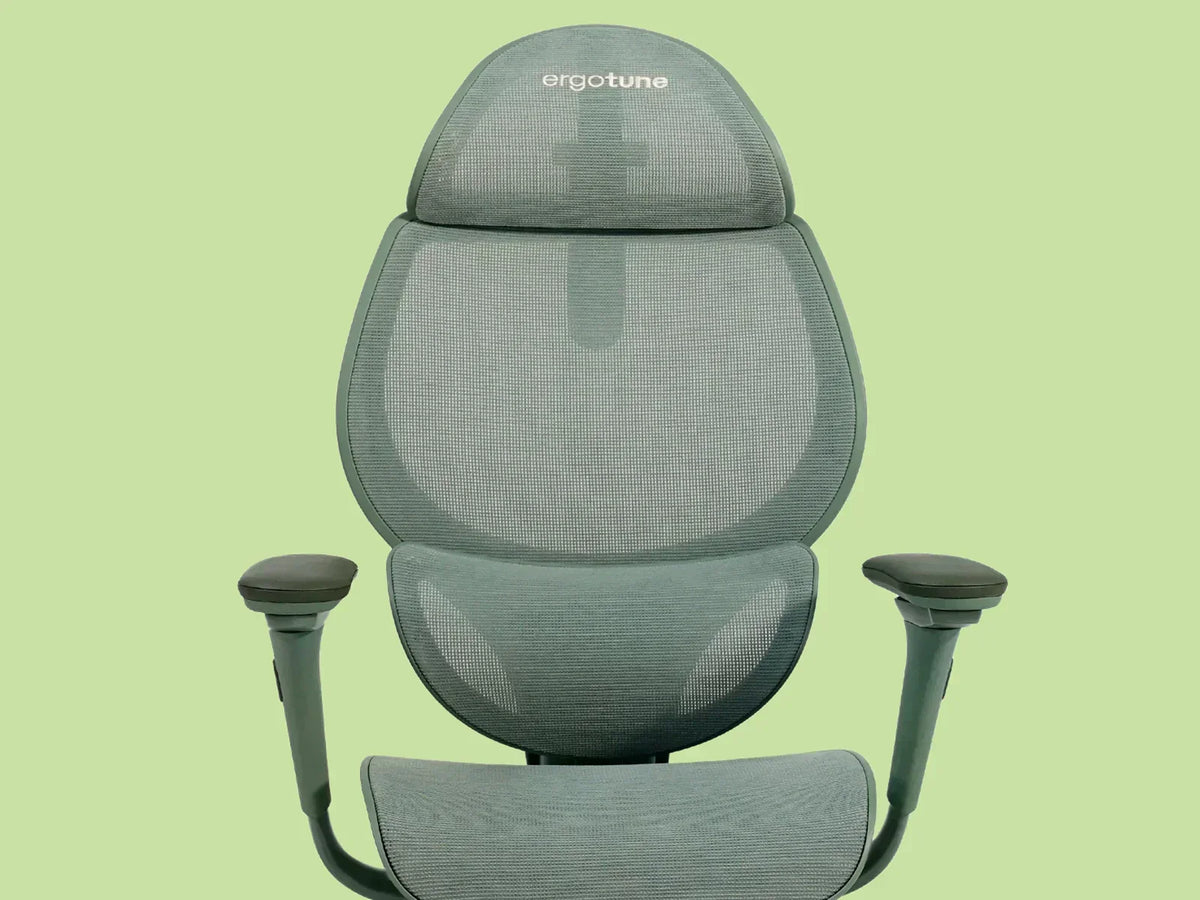
Explore the ergotune Vesby ergonomic chair today.