





You started working from home at the dining table. Many of us did.
Then your back started complaining, so you bought a padded office chair. Wheels, a lever, a bit of cushioning. Problem solved.
Except it wasn’t. By 4pm you’re still shifting around, rubbing your neck, and wondering why the “proper” chair doesn’t feel much better.
The good news is that you’re not imagining it. We surveyed 500 Australian remote workers to find out what’s really happening at home desks, and the results surprised us too.
- Dining chairs aren’t built for desk work: 61.5% of dining chair users report constant slouching and 51.9% report severe neck pain.
- The budget office chair upgrade often doesn’t help. 43.3% of standard office chair users report severe discomfort by 4pm, compared with 36.5% sitting on dining chairs.
- Ergonomic chair users reported the lowest rate of severe 4pm discomfort, at 27.2%.
- 39.1% of standard chair users say they’ve turned up the AC because of their chair.
- 73% of budget chair buyers regret their purchase.
- Gaming chairs didn’t fare much better.
Why your dining chair was never going to work
Dining chairs are designed for a meal, not an eight-hour workday.
There’s no back support and nowhere to rest your arms. So your muscles end up doing the job the chair should be doing. In our survey, 61.5% of dining chair users reported constant slouching and 51.9% reported severe neck pain.
Michelle Collins, Principal Physiotherapist at Northern Districts Physiotherapy & Sports Clinic, says the problem isn’t one bad posture. It’s the same posture held for too long.
“There’s no back support and nowhere to rest your arms, so people end up holding themselves upright with muscle instead of letting the chair do it. By mid-afternoon they’re shifting position every few minutes because nothing feels right. That restlessness is usually the first sign, well before anything actually hurts.”
So that fidgety 3pm feeling is worth paying attention to.
If daily neck pain sounds familiar, here’s how your chair can make tech neck worse.
The upgrade that isn’t an upgrade
Here’s where it gets interesting.
You’d expect a standard padded office chair to beat a dining chair. It’s literally made for working at a desk. But the people in our survey who’d made that switch reported higher rates of severe 4pm discomfort: 43.3%, versus 36.5% on dining chairs.
Compare that to people on a dedicated ergonomic chair with adjustable lumbar support and mesh backing. Their rate was only 27.2%. That’s a 16 percentage point gap, which means standard chair users reported severe discomfort at a rate 59% higher than ergonomic chair users.
Part of the problem is fit. A basic padded chair has limited adjustment, so it may not suit your height and build, no matter how sleek it looks.
Dr Daniel Grynberg, Chiropractor and Working-from-Home Health and Safety Specialist at Active Health Partners, sees this pattern regularly.
“We commonly see people slide forward, round their back, and bring their head and shoulders closer to the screen. Over time, this can contribute to discomfort in the lower back, neck, shoulders and hips.”
He’s also clear that it’s not just about the chair. It’s often a mix of inadequate support, poor desk setup and not changing position often enough through the day.
The ‘sweat tax’ nobody puts on the price tag
Comfort isn’t only about your back and neck.
39.1% of standard office chair users told us they’ve turned up their home AC because of their chair, compared with 32% of workers using a breathable mesh ergonomic chair.
It’s not a huge difference on paper, but if you’ve ever peeled yourself off a padded seat in the peak of a Queensland summer, you can probably relate.
What about gaming chairs?
They look the part. Big bolsters, racing-style headrests, and plenty of padding.
But gaming chair users in our survey reported a 30% severe discomfort rate by 4pm. And 65% said their upper back and neck comfort had stayed the same or got worse since using the chair full-time.
We’ve dug into this one before, if you want the full picture: Gaming Chairs vs Ergonomic Chairs: Why It Matters After Hour 3.
| Seating type | Severe 4pm discomfort | Gap vs. ergonomic chair | What we found |
|---|---|---|---|
| Dedicated ergonomic chair | 27.2% | Baseline | Lowest discomfort rate of any group |
| Gaming chair (Bucket style) | 30% | +3 pp (+10% relative) | 39% regret it due to materials wearing out; 65% say upper back/neck comfort stayed the same or got worse |
| Dining chair or stool | 36.5% | +9 pp (+34% relative) | 61.5% constant slouching; 51.9% severe neck pain |
| Standard office chair (Basic foam) | 43.3% | +16 pp (+59% relative) | 39.1% have turned up the AC because of their chair |
| Couch, bed, or floor | 43% | +16 pp (+59% relative) | Same discomfort rate as a standard office chair |
| Severe discomfort = rating 4pm comfort 4 or lower out of 10. Source: June 2026 survey of 500 Australian remote workers who work from home at least two days a week, commissioned by ErgoTune and conducted by Octopus Group. | |||
Why so many people regret the cheap office chair
Put all of that together and this number makes sense: 73% of budget office chair buyers told us they regret their purchase.
The savings look great on the receipt. What you don’t see at checkout is what long WFH days feel like on that chair, day after day, week after week. And chairs that don’t hold up long mean you’re back to shopping around for a new chair sooner.
Easy fixes for the chair you’ve already got
You don’t need to buy something new to start feeling better. Try these tips first:
- Check your seat height. Feet flat on the floor, knees roughly level with your hips.
- Support your lower back. No lumbar support? A rolled towel or small cushion behind your lower back is a decent stopgap.
- Bring the screen to you. The top of your monitor should sit around eye level, so you’re not craning forward.
- Rest your arms. Elbows at roughly 90 degrees, shoulders relaxed. If your armrests push your shoulders up, lower them or remove them.
- Move more often. Dr Grynberg’s point stands: not changing position is part of the problem. Stand up, stretch or walk around at least once an hour. Dance if that’s your jam.
- Notice the 3pm fidget. If you’re constantly shifting by mid-afternoon, your setup is telling you something.
If you’re ready to upgrade properly
If you’ve tried the fixes and you’re still sore by 4pm, it might be time to look at a chair built for long workdays.
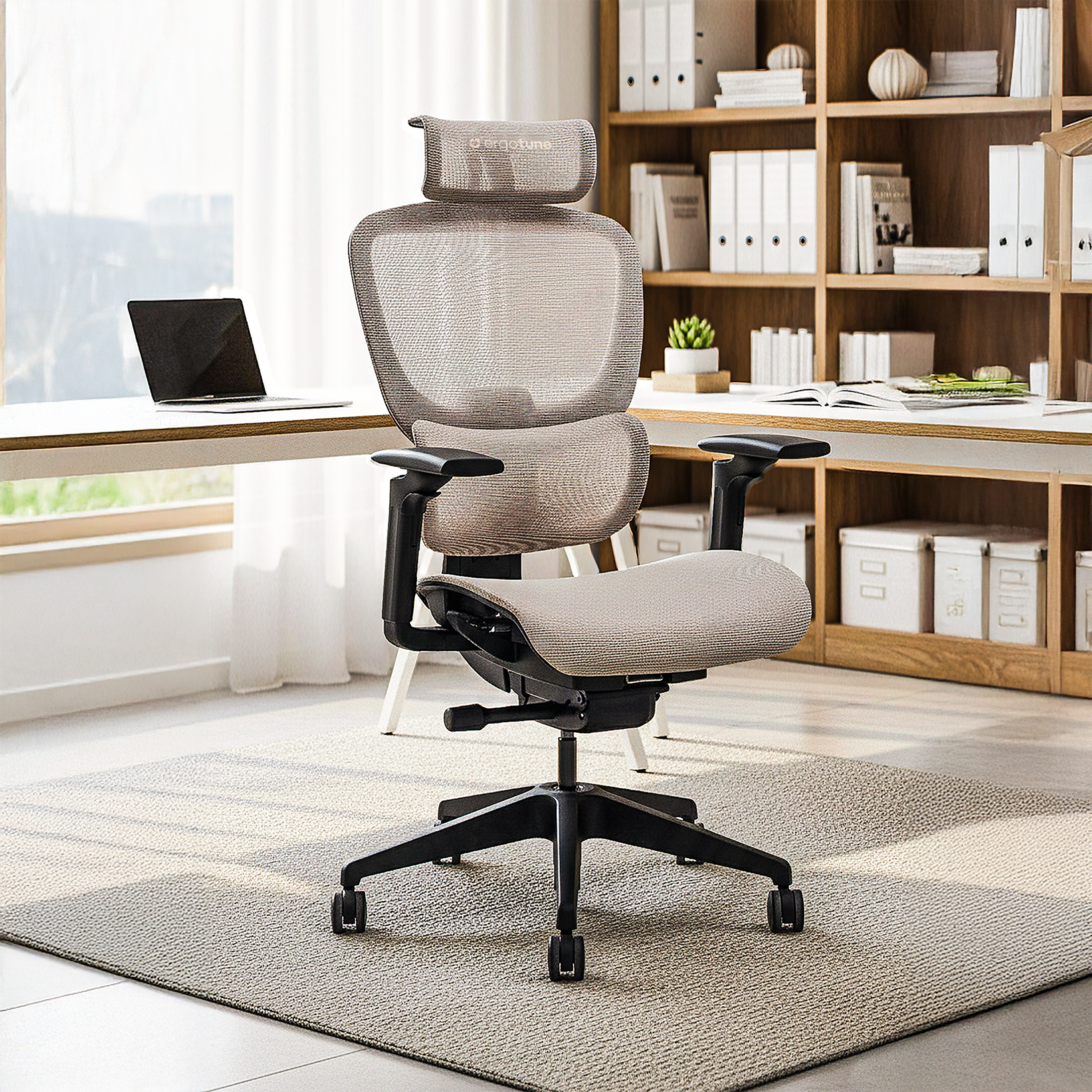
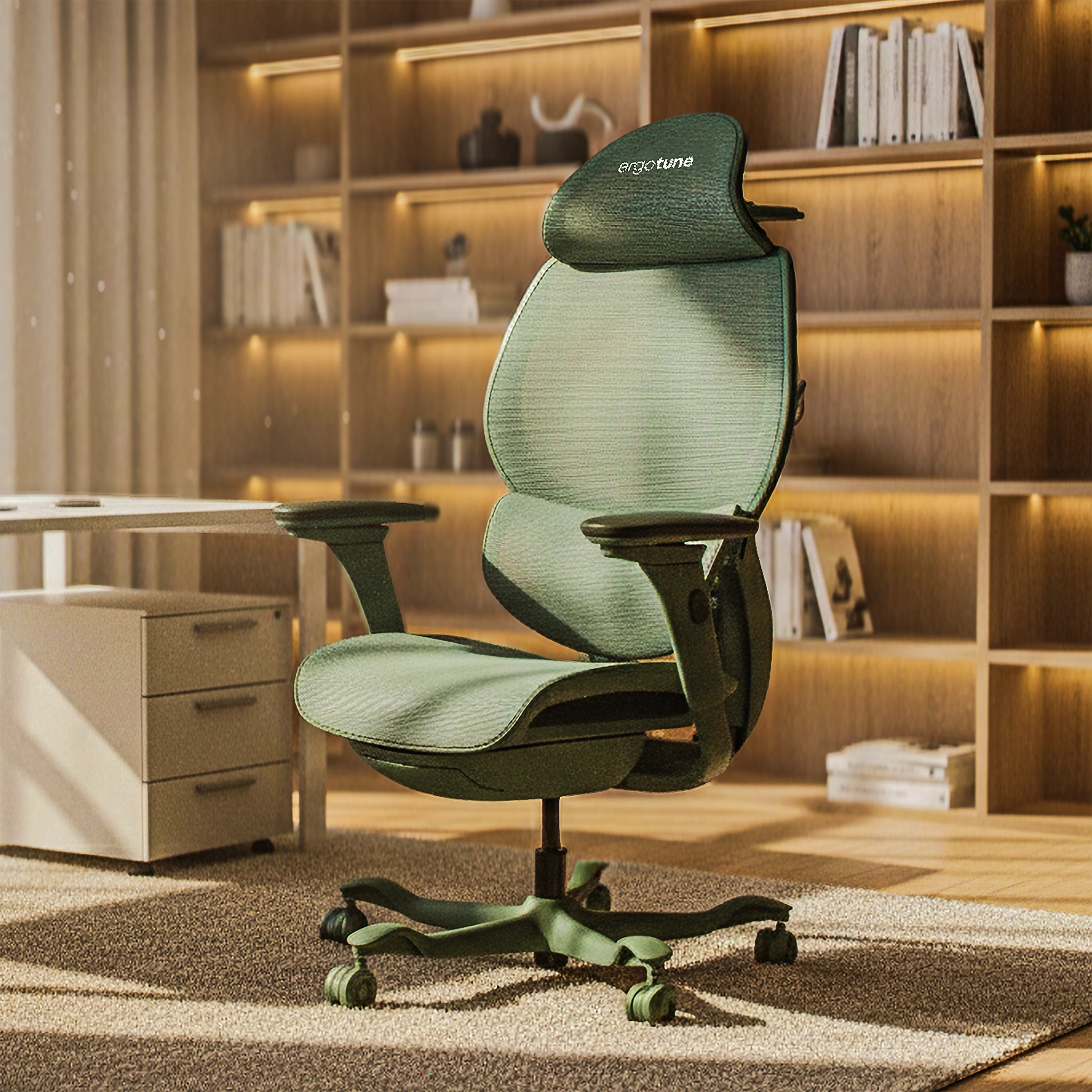
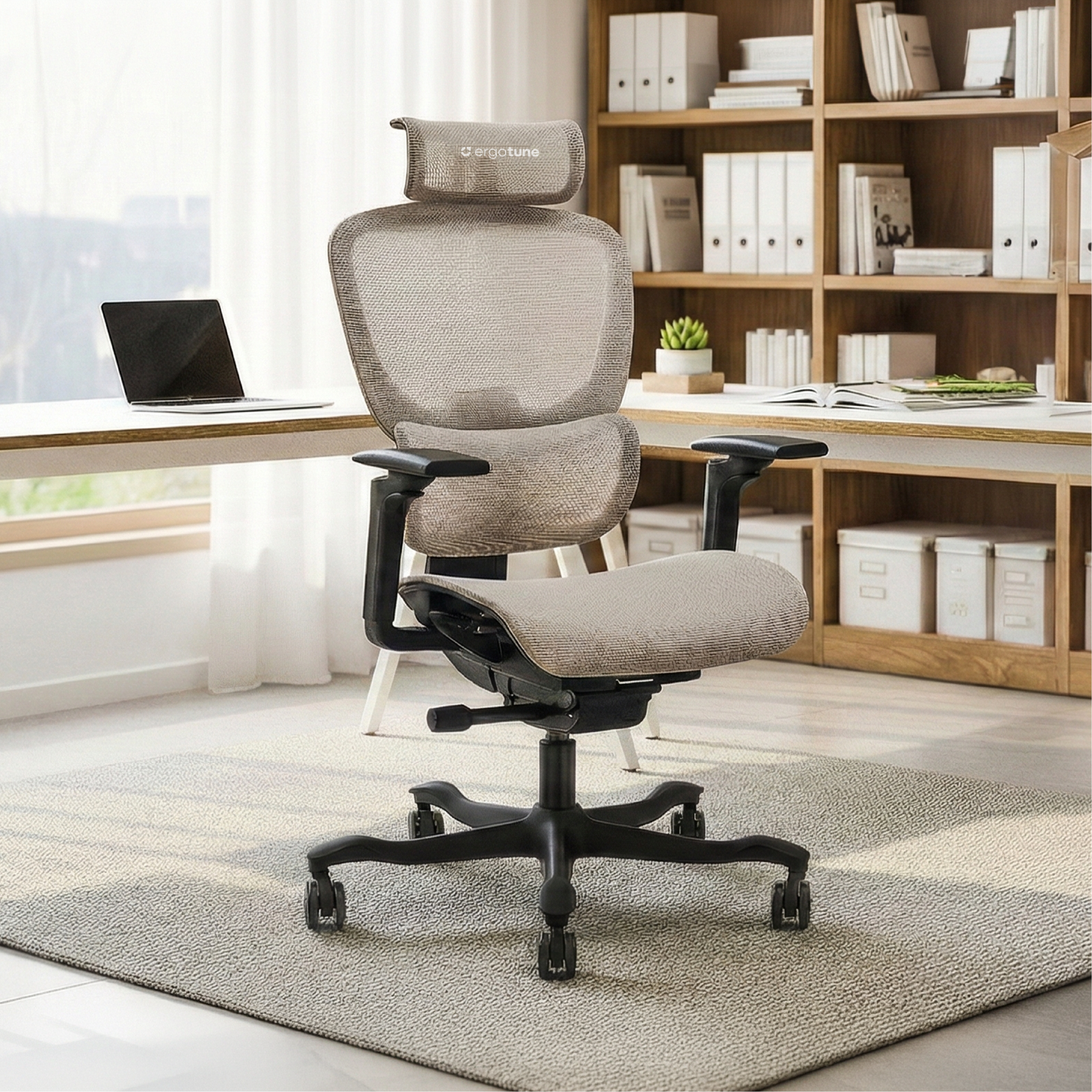
The ergonomic chair users in our survey reported the lowest discomfort rates of any group. The things to look for: adjustable lumbar support, breathable mesh, plus armrests and a headrest you can tailor to your body.
That’s what our range is built around, from the Joobie Lite and best-selling Joobie through to the ergotune Vesby. Every chair comes with a 3-week trial, so you can test it through some real 4pm slumps before you part with your money.
Not sure where to start? Our guide to the best office chairs for long workdays is a good next read.
Your back has put up with the dining chair long enough.
About the research: Findings are from a June 2026 survey of 500 Australian residents who work from home at least two days a week, commissioned by ErgoTune and conducted by independent research agency Octopus Group. The survey measured self-reported comfort at 9am and 4pm on a 1–10 scale, alongside seating type and thermal-comfort behaviours.