





You've measured yourself against a chair's website copy more than once. "Fits users from 150cm to 190cm." Sounds reassuring, but what if you’re 194cm, or 148cm, or somewhere just outside a number that was rounded up to look tidy on paper?
Every ergonomic chair brand publishes a height and weight range. Almost none of them explain how that range was decided, or what actually happens if your measurements don’t fit within their dimensions.
Here's an overview of chair sizes across the market, and how to choose the size that fits you best.
- Most ergonomic chairs are engineered around an 'average' adult body. In Australia that's roughly 176cm for men and 162cm for women, based on the latest ABS health data.
- Brands solve the 'outside the average' problem a few ways: multiple chair sizes, one chair with a wider adjustment range, or an independently adjustable backrest for torso length.
- Multiple sizes fix the fit at the extremes but create a new problem: you have to correctly identify your own size, which is harder than it sounds.
- ErgoTune runs three chairs across the range, and uses more than one sizing strategy itself.
- No chair fits everyone identically. A printed range tells you what was tested, not what will feel right on your specific proportions.
Most office chairs are designed around the 'average' body
Every seat height, seat depth and backrest curve on an office chair is set around somebody's idea of an average adult. In Australia, that's a man of about 176cm or a woman of about 162cm, based on the Australian Bureau of Statistics Health Survey. Most people fall within a reasonably wide band either side of that. A chair tuned to fit comfortably from around 155cm to 185cm will genuinely work for the bulk of the population.
The trouble starts at the edges. Once you're above roughly 190cm or below roughly 150cm, the seat height, seat depth and headrest position that felt like a sensible average design choice can start working against you instead of for you. Feet stop reaching the floor. The seat pan is too narrow for your hips. Headrests land somewhere around your shoulder blades rather than the base of your skull.
These are design constraints every brand has to solve, and they generally solve them in one of a few ways.
Three ways brands build office chairs based on sizing
More sizes.
Some chairs are sold in three distinct sizes, small, medium and large, each with its own seat pan and gas lift. Herman Miller's Aeron is the best-known example: Size A runs a 401-507mm seat height for users roughly 142-163cm, Size B runs 450-580mm for roughly 158-183cm, and Size C runs 463-593mm for roughly 178-200cm, with weight capacity rising to around 159kg on the larger sizes.
To get the most benefit from your ergonomic chair, you’ll need to know to measure your sizing and know the right fit for you. And be mindful when comparing the sizing across listings and especially when buying second-hand chairs that may not specify the size at all.
One size, wider range.
Other chairs are built as a single size and stretch the seat height and depth adjustment as far as the mechanics allow. ErgoTune's Vesby and Joobie Lite both work this way. So does Steelcase's Leap, which Steelcase states is best suited to users between 150cm and 190cm. Sihoo's M57 follows a similar pattern, broadly comfortable across an average-to-tall range, with fit becoming noticeably less precise past roughly 190cm.
One size, independently adjustable backrest.
A smaller group of chairs solve part of the problem differently again: instead of only moving the seat up and down, the backrest itself slides up and down against the seat pan, separate from seat height. Desky's Pro+ does this, with an adjustable back height on top of its seat height range. That's a genuine advantage for torso length specifically, someone with a long torso and short legs, or the reverse, can get a better match than seat height adjustment alone provides.
None of these approaches is simply 'better'. They're different trade-offs for the same underlying problem: no single seat pan and backrest suits a 148cm frame and a 205cm frame, or a long torso and a long femur, equally well.
Where ErgoTune's three chairs actually sit
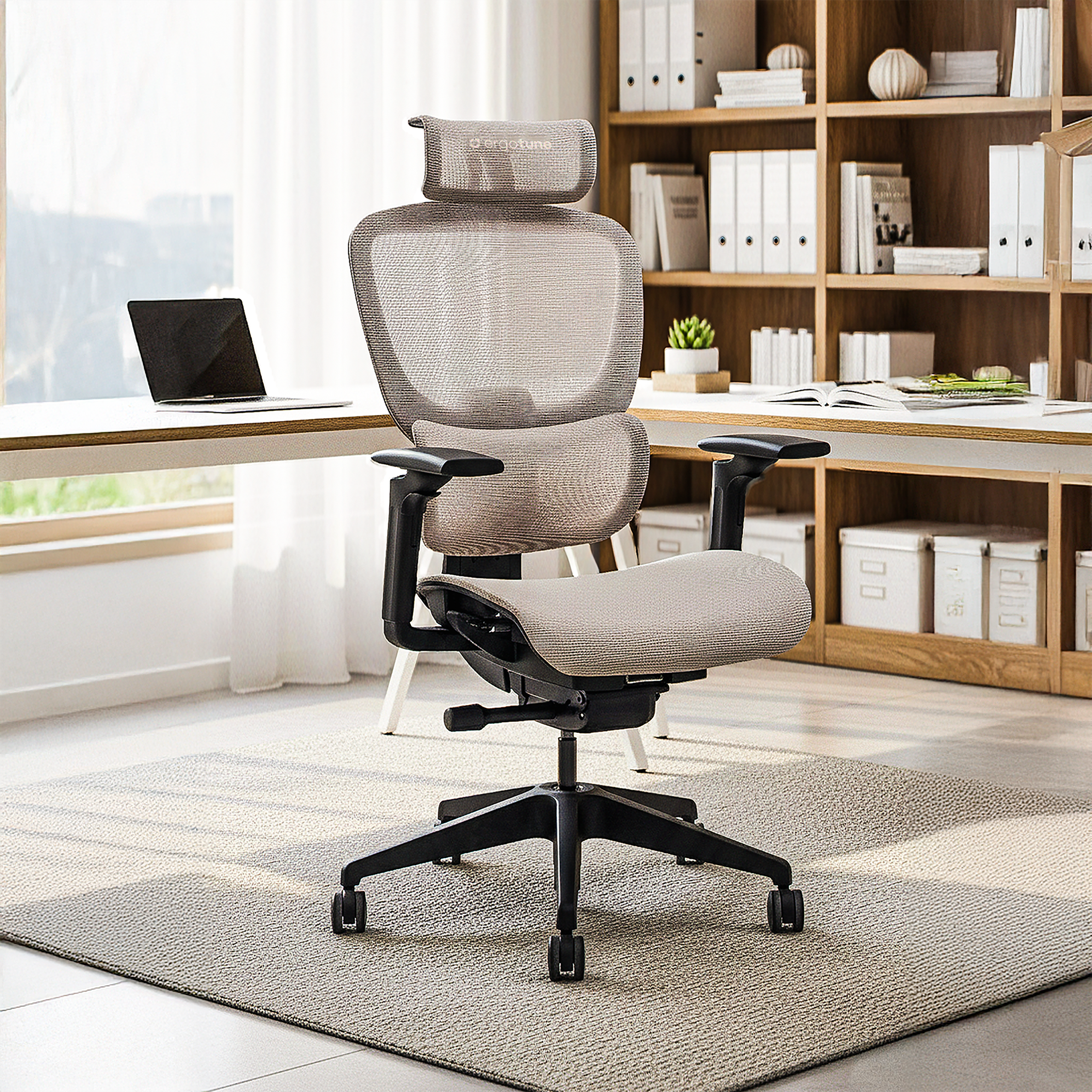
The Joobie Lite is single-size, built for 148cm to 200cm. That comfortably covers the ABS average for both Australian men and women, plus a healthy margin on either side, at the most accessible price point in the range.
The Joobie is also a single size, with the Australian model built for people from 148cm to 200cm.
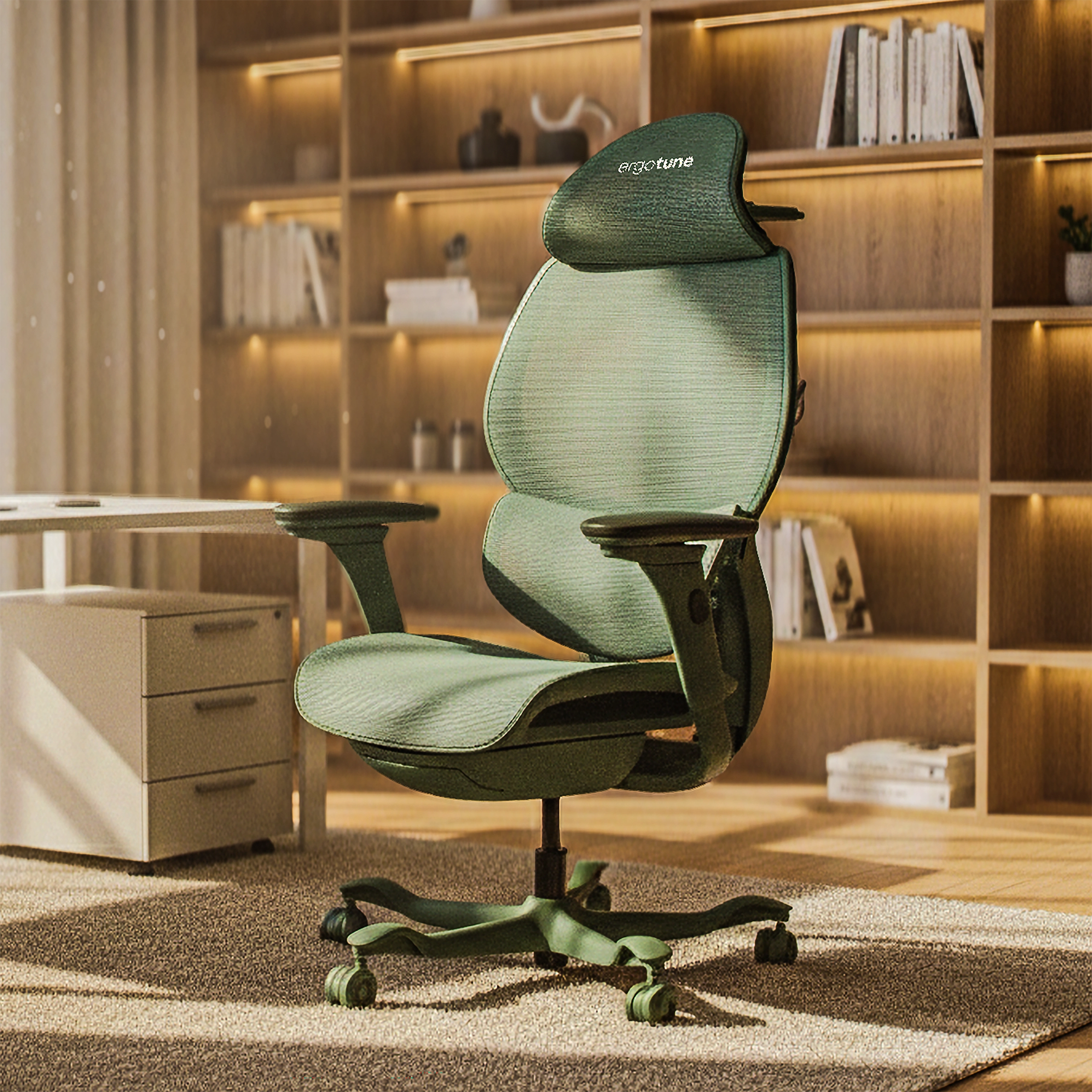
The Vesby is single-size, extending to 210cm with a 130kg weight capacity for taller users. That's a genuinely wide window for a single seat pan, wider than most single-size mesh chairs on the market.
Most chairs you'll find on the market are built to comfortably fit someone up to around 190cm before fit starts to noticeably compromise. Above that, options thin out fast, which is where a wider single-size range, or a dedicated larger size, starts to matter.
A wider range isn't a guarantee
Extending an office chair range doesn't make it limitless. If you're right at the very top or bottom of what's on a spec sheet, whether that's for an ErgoTune chair or any other brand, the smart move is to check the actual dimensions against your own body, not just the headline number.
Two people at the same height can have very different torso-to-leg ratios, and a chair that suits one person perfectly can leave the other reaching for their lumbar or headrest adjustment more than they'd like. That's true of all brands, even ours.
How the office chair market stacks up
Here's how ErgoTune's three chairs sit against six other chairs commonly compared to them, based on each brand's own published specifications.
| Brand & Chair Type | Sizing Approach | Height Range | Weight Capacity |
|---|---|---|---|
| ErgoTune Joobie Lite | Single size | 148cm to 200cm | 130kg |
| ErgoTune Joobie | Single size | 148cm to 200cm | 130kg |
| ErgoTune Vesby | Single size | 145cm to 210cm | 130kg |
| Herman Miller Aeron | Three sizes (A/B/C) | 142cm to 200cm | 136kg to 159kg |
| Steelcase Leap | Single size | 150cm to 190cm | 150kg |
| Ergohuman 2 Elite Mesh | Single size | Not published | 150kg |
| Sihoo M57 | Single size | 150cm to 190cm | 150kg |
| Desky CoilFlex (with headrest) | Single size, extended tall-user headrest | Up to 200cm | 136kg |
| Desky Pro+ | Single size, independently adjustable back height | Up to 200cm | 150kg |
| IKEA Markus | Single size | Not published | 110kg |
Specs are drawn from each brand's current published pages as of writing, plus direct confirmation from Desky's and Sihoo's customer service teams where a public spec sheet wasn't available. The numbers might move between revisions, so treat this as a snapshot rather than a live spec sheet.
Ergohuman and IKEA don't publish a recommended user height for this model, both list seat height and overall chair dimensions instead, so "not published" reflects a genuine gap in their own documentation rather than an oversight on our part.
How to actually check if a chair fits you
Skip the marketing photo. Do this instead.
- Seat height. Correctly, your feet should sit flat on the floor with knees at roughly 90 degrees. If your feet dangle or your knees sit higher than your hips, the minimum seat height is too high for you.
- Seat depth. Ideally, you want a two to three finger gap between the back of your knee and the front edge of the seat. Less than that and the edge digs in. More than that and your back loses support.
- Seat width. Evenly, the seat pan should sit roughly level with your hips, not noticeably narrower or wider. Too narrow and you feel perched on an edge. Too wide and you lose side support and end up shifting to one side to find the armrest.
- Backrest height. Properly, it should reach your shoulder blades, not stop at your lower back.
- Headrest. Supportively, it should meet the base of your skull, not the top of your neck. If it pushes your head forward, it's sitting too low for you.
- Armrests. Comfortably, with shoulders relaxed, your elbows should rest at close to 90 degrees without hunching up or reaching down.
- Recline tension. Ideally, check whether it's a manual dial you set yourself, or a mechanism that only responds to your body weight pushing back on it. The manual version is the one that can actually be adjusted to suit you, rather than assuming you're an 'average' weight.
If you're buying online and can't test any of this in person first, you can still do most of it with a tape measure. Sit in a chair you already own, measure from the floor to the back of your knee (that's your minimum seat height), and from the back of your knee to your backside (that's your seat depth). Check both against the spec sheet before you order, not after it arrives.
Even then, a spec sheet is still an estimate of what should work, not a guarantee. That's what a trial period is actually for.
Ready to find your fit?
Getting the actual dimensions right matters more than which brand name is on the backrest. If you sit outside the range most single-size chairs are built around, our sales team can help you find the right fit.
At ErgoTune, you can try a chair for 3 weeks and send it back if you’re not satisfied.
Product specification sheets referenced:
- Steelcase Leap V2: https://au.steelcase.com/products/steelcase-leap
- Herman Miller Aeron: https://eustore.hermanmiller.com/pages/aeron-buying-guide
- Ergohuman: https://www.ergohuman.com.au/product/ergohuman-2-elite-mesh/
- Sihoo M57: No documentation available. Verified via customer support text message.
- Desky CoilFlex: Height verified by customer service
- Desky Pro+: Height verified by customer service
- IKEA Markus: https://www.ikea.com/au/en/p/markus-office-chair-vissle-dark-grey-50261151/